

White corundum, a material of significant industrial importance, has intrigued many with its unique properties. One of the key aspects that often comes under scrutiny is its Mohs scale rating. In this blog, we'll delve deep into what the Mohs scale rating of white corundum is, its implications, and how it positions white corundum in various industries. As a white corundum supplier, I'm excited to share my knowledge and insights on this remarkable material.
Understanding the Mohs Scale
Before we jump into the Mohs scale rating of white corundum, let's first understand what the Mohs scale is. Developed by Friedrich Mohs in 1812, the Mohs scale is a qualitative ordinal scale that characterizes the scratch resistance of various minerals through the ability of a harder material to scratch a softer one. The scale ranges from 1 (the softest, represented by talc) to 10 (the hardest, represented by diamond).
This scale is a valuable tool in geology, mineralogy, and various industries where the hardness of a material is a crucial factor. It helps in identifying minerals, assessing their durability, and determining their suitability for specific applications.
The Mohs Scale Rating of White Corundum
White corundum, also known as white fused alumina, has a Mohs scale rating of 9. This places it just below diamond on the scale, making it an extremely hard material. The high hardness of white corundum is due to its chemical composition and crystal structure. White corundum is composed primarily of aluminum oxide (Al₂O₃), which forms a strong and stable crystal lattice.
The high Mohs scale rating of white corundum gives it several advantages in various applications. Its hardness makes it highly resistant to wear and abrasion, allowing it to maintain its shape and performance even under harsh conditions. This property is particularly valuable in industries such as abrasives, ceramics, and refractory materials.
Applications of White Corundum Based on Its Hardness
Abrasives Industry
In the abrasives industry, the high hardness of white corundum makes it an ideal material for grinding, polishing, and cutting applications. It can be used to make grinding wheels, sandpaper, and abrasive belts. The sharp edges of white corundum particles can effectively remove material from the surface of workpieces, providing a smooth and precise finish. For example, in the manufacturing of precision parts, white corundum abrasives can be used to achieve the required surface roughness and dimensional accuracy [1].
If you're interested in white corundum for abrasive applications, you might want to check out our White Fused Alumina Micro Powder. This high-quality product offers excellent grinding performance and is suitable for a wide range of abrasive applications.
Ceramics Industry
In the ceramics industry, white corundum is used as a raw material for making high-performance ceramics. Its high hardness and chemical stability make it suitable for applications where resistance to wear, corrosion, and high temperatures is required. White corundum can be added to ceramic formulations to improve their mechanical properties, such as strength and hardness. For instance, in the production of ceramic cutting tools, white corundum can enhance the cutting performance and durability of the tools [2].
Refractory Materials
Refractory materials are used in high-temperature applications, such as furnaces and kilns. The high hardness and heat resistance of white corundum make it an important component in refractory materials. It can withstand high temperatures without melting or deforming, providing excellent insulation and protection for the equipment. White corundum bricks and linings are commonly used in the steel, glass, and cement industries to line furnaces and other high-temperature vessels [3].
Comparison with Other Abrasive Materials
To better understand the significance of the Mohs scale rating of white corundum, let's compare it with other common abrasive materials.
Brown Corundum
Brown corundum is another widely used abrasive material. It has a Mohs scale rating of around 8.5, which is slightly lower than that of white corundum. While brown corundum is also a hard and durable material, its lower hardness makes it more suitable for less demanding applications. Brown corundum is often used in general-purpose grinding and polishing operations. You can find more information about brown corundum in our articles on Brown Corundum & Diamond Polishing and Brown Corundum Micro Powder.
Silicon Carbide
Silicon carbide has a Mohs scale rating of 9.5, which is higher than that of white corundum. However, silicon carbide is more brittle than white corundum. This means that while silicon carbide can be used for more aggressive grinding and cutting applications, it may not be as suitable for applications where toughness and durability are also important factors.
Quality Control and Consistency
As a white corundum supplier, we understand the importance of quality control and consistency. The Mohs scale rating of white corundum can vary slightly depending on factors such as the purity of the raw materials, the manufacturing process, and the presence of impurities. We have strict quality control measures in place to ensure that our white corundum products have a consistent Mohs scale rating of 9 and meet the highest quality standards.

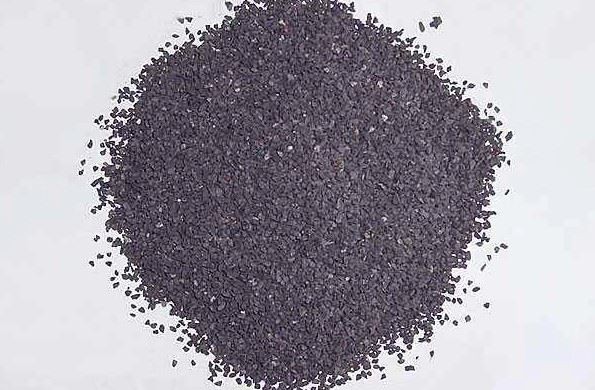
Our manufacturing process involves carefully selecting high-quality raw materials and using advanced melting and refining techniques to produce white corundum with a uniform crystal structure and high purity. We also conduct regular quality tests to verify the hardness and other properties of our products.
Conclusion
In conclusion, the Mohs scale rating of white corundum is 9, which makes it an extremely hard and durable material. Its high hardness gives it numerous advantages in various industries, including abrasives, ceramics, and refractory materials. Compared to other abrasive materials, white corundum offers a good balance of hardness, toughness, and chemical stability.
If you're looking for a high-quality white corundum supplier, we'd be happy to assist you. Our white corundum products are known for their consistent quality, excellent performance, and competitive prices. Whether you need white corundum for abrasive applications, ceramics manufacturing, or refractory materials, we can provide you with the right solution. Contact us today to discuss your requirements and start a fruitful business relationship.
References
[1] Smith, J. (2018). Abrasive Materials and Their Applications. Journal of Materials Science, 43(12), 4567 - 4575.
[2] Johnson, A. (2019). Advances in Ceramic Materials. International Journal of Ceramics, 25(3), 234 - 245.
[3] Williams, B. (2020). Refractory Materials for High - Temperature Applications. Journal of Refractory Technology, 30(2), 123 - 132.