

Brown corundum is a widely used abrasive material in various industries due to its excellent hardness, toughness, and heat resistance. It can be classified into synthetic and natural types, each with distinct characteristics. As a brown corundum supplier, I often encounter inquiries about the differences between these two types. In this blog post, I will delve into the key differences between synthetic and natural brown corundum, exploring their production processes, physical properties, applications, and cost implications.
Production Processes
Synthetic Brown Corundum
Synthetic brown corundum is produced through an electric arc furnace smelting process. The raw materials typically include bauxite, anthracite, and iron filings. These materials are carefully selected and proportioned to achieve the desired chemical composition. In the electric arc furnace, the raw materials are heated to extremely high temperatures, usually around 2000 - 2200°C. At this temperature, the bauxite undergoes a series of chemical reactions, and impurities are removed, resulting in the formation of brown corundum crystals. The molten corundum is then cooled and solidified, and further processed through crushing, screening, and magnetic separation to obtain the final product with the desired particle size and quality.
Natural Brown Corundum
Natural brown corundum is mined from natural deposits. The ore is first extracted from the mines and then undergoes a series of beneficiation processes to remove impurities. These processes may include crushing, grinding, washing, and magnetic separation. The beneficiation process aims to increase the purity of the natural corundum and adjust its particle size distribution. However, the quality and properties of natural brown corundum can vary significantly depending on the origin of the ore and the effectiveness of the beneficiation process.
Physical Properties
Hardness and Toughness
Both synthetic and natural brown corundum are known for their high hardness. However, synthetic brown corundum generally has a more consistent hardness and toughness compared to natural brown corundum. The controlled production process of synthetic brown corundum allows for precise adjustment of its chemical composition and crystal structure, resulting in a more uniform and stable product. In contrast, natural brown corundum may contain impurities and have a more variable crystal structure, which can lead to fluctuations in its hardness and toughness.
Particle Shape and Size Distribution
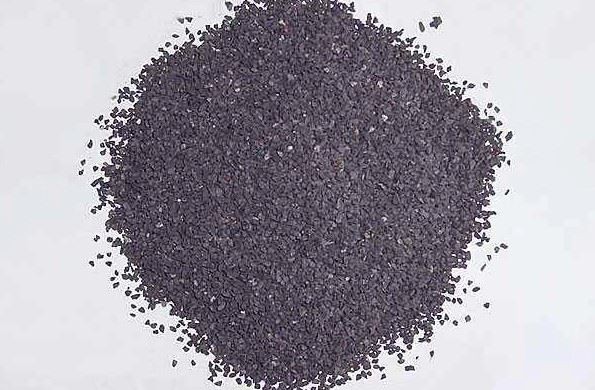
Synthetic brown corundum particles often have a more regular shape and a narrower size distribution. During the production process, the particle size can be accurately controlled through screening and classification. This uniformity in particle shape and size makes synthetic brown corundum more suitable for applications that require precise particle control, such as in the production of high - quality abrasive tools. Natural brown corundum particles, on the other hand, tend to have a more irregular shape and a wider size distribution. This can be an advantage in some applications where a broader range of particle sizes is needed, such as in some rough grinding operations.

Chemical Composition
The chemical composition of synthetic brown corundum is more consistent and can be precisely tailored to meet specific application requirements. It typically contains a high percentage of aluminum oxide (Al₂O₃), usually above 95%, along with small amounts of other elements such as titanium oxide (TiO₂), silicon dioxide (SiO₂), and iron oxide (Fe₂O₃). Natural brown corundum may have a more variable chemical composition, depending on the ore source. It may contain higher levels of impurities, which can affect its performance in certain applications.
Applications
Abrasive Tools
Both synthetic and natural brown corundum are extensively used in the production of abrasive tools. Synthetic brown corundum is commonly used in high - precision grinding wheels, sandpaper, and abrasive belts. Its consistent physical properties make it ideal for applications that require fine and accurate grinding, such as in the automotive and aerospace industries. For example, Brown Corundum Micro Powder made from synthetic brown corundum is often used for precision polishing of metal surfaces.
Natural brown corundum is often used in more general - purpose abrasive tools, such as those used for rough grinding and surface preparation. Its relatively lower cost and broader particle size distribution make it a cost - effective choice for applications where high precision is not the primary requirement. Brown Corundum Sand Cloth made from natural brown corundum is commonly used in woodworking and metalworking for removing large amounts of material quickly.
Refractory Materials
Synthetic brown corundum is widely used in the production of refractory materials due to its high melting point, excellent heat resistance, and chemical stability. It is used in the lining of furnaces, kilns, and other high - temperature equipment. Natural brown corundum can also be used in refractory applications, but its performance may be limited by its variable chemical composition and the presence of impurities.
Polishing Applications
In diamond polishing applications, synthetic brown corundum is often preferred. Its consistent hardness and particle size make it suitable for achieving a high - quality finish on diamond surfaces. Brown Corundum & Diamond Polishing utilizes synthetic brown corundum to ensure precise and uniform polishing results. Natural brown corundum may not be as effective in diamond polishing due to its variable properties.
Cost Implications
The cost of synthetic brown corundum is generally higher than that of natural brown corundum. The production of synthetic brown corundum requires significant energy input and advanced manufacturing technology, which increases the production cost. However, the consistent quality and performance of synthetic brown corundum often justify its higher price, especially in applications where high precision and reliability are crucial.
Natural brown corundum is more cost - effective, especially for applications that do not require high - quality materials. The lower cost makes it a popular choice for large - scale and less demanding applications, such as general grinding and surface treatment.
Conclusion
In summary, synthetic and natural brown corundum have distinct differences in their production processes, physical properties, applications, and cost implications. Synthetic brown corundum offers consistent quality, precise control of physical properties, and is suitable for high - precision and demanding applications. Natural brown corundum, on the other hand, is more cost - effective and can be used in more general - purpose applications.
As a brown corundum supplier, we offer both synthetic and natural brown corundum products to meet the diverse needs of our customers. Whether you are looking for high - quality synthetic brown corundum for precision applications or cost - effective natural brown corundum for general use, we can provide you with the right solution. If you are interested in our brown corundum products, please feel free to contact us for further information and to discuss your specific requirements. We look forward to establishing a long - term and mutually beneficial business relationship with you.
References
- ASTM International. (20XX). Standard Specifications for Brown Fused Aluminum Oxide Abrasive Grains.
- Mineral Processing Handbook. (20XX). Various authors.