

Hey there, 3D printing enthusiasts! As a supplier of white aluminum oxide, I've been getting a lot of questions lately about whether this nifty material can be used in the 3D printing industry. Well, you've come to the right place because I'm gonna break it all down for you in this blog post.
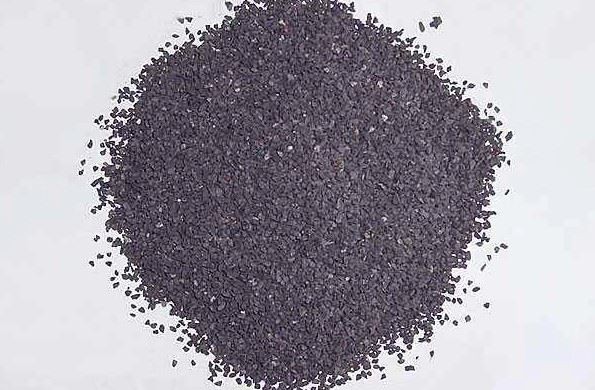
First off, let's talk a bit about what white aluminum oxide is. Also known as White Corundum, it's a super - hard and durable material. It's made by melting high - purity alumina powder in an electric arc furnace at temperatures over 2,000°C. Once it cools down, you get this granular stuff that's got some amazing properties. It's got high hardness, good chemical stability, and excellent cutting ability. That's why it's commonly used in abrasives, like Corundum Abrasive applications.
So, can this stuff have a place in 3D printing? Well, let's look at the pros first.
One of the big advantages of using white aluminum oxide in 3D printing is its strength. 3D printed objects need to be robust and able to withstand wear and tear. White aluminum oxide can add that extra toughness to the printed parts. For example, if you're printing parts for industrial machinery, you need something that can handle high stress and friction. The high hardness of white aluminum oxide means that it can make the printed parts more resistant to scratches, abrasions, and deformation.
Another plus is its heat resistance. In some 3D printing processes, like those involving high - temperature polymers, the printed parts might be exposed to high heat. White aluminum oxide has a high melting point, which means that it can maintain its structural integrity at elevated temperatures. This is crucial for applications where the 3D printed object will be used in a hot environment, such as in aerospace or automotive components.
It also has good chemical stability. This means that the white aluminum oxide won't react with most chemicals, which is great if the 3D printed parts are going to be used in a chemical - rich environment. For instance, if you're printing parts for a laboratory or a chemical processing plant, you don't want the material to break down or corrode due to chemical exposure.
But of course, it's not all sunshine and rainbows. There are also some challenges when it comes to using white aluminum oxide in 3D printing.
One of the main issues is its brittleness. While it's very hard, it's also a bit brittle, which means that it can crack or break under certain stress conditions. This can be a problem, especially if you're printing complex or thin - walled parts. You need to find a way to balance the hardness and the brittleness to ensure that the printed parts are functional.
Another challenge is the processing difficulty. White aluminum oxide is a granular material, and getting it to work well in 3D printing filaments or powders can be tricky. You need to make sure that the particles are evenly dispersed in the printing medium. If they're not, it can lead to uneven printing, weak spots in the printed parts, and even clogging of the 3D printer nozzle.

When it comes to the 3D printing processes themselves, different techniques have different levels of compatibility with white aluminum oxide. For example, in Fused Deposition Modeling (FDM), you'd need to create a composite filament that combines white aluminum oxide with a polymer. Making this filament can be a bit of a technical challenge because you have to ensure that the aluminum oxide particles don't clump together and that the filament has a consistent diameter.
Stereolithography (SLA) might also have some potential for using white aluminum oxide. In SLA, a liquid resin is cured using a laser. You could potentially add white aluminum oxide particles to the resin to enhance its properties. But again, getting the right concentration and dispersion of the particles is key.
Selective Laser Sintering (SLS), on the other hand, involves using a laser to sinter powder particles together. White aluminum oxide powder could be used in this process, but you'd need to optimize the sintering parameters to ensure good bonding between the particles.
Now, let's think about some real - world applications. In the medical field, you could use 3D printed parts with white aluminum oxide for surgical instruments. The hardness and chemical stability of white aluminum oxide would make the instruments more durable and resistant to the chemicals used for sterilization.
In the manufacturing industry, you could print custom jigs and fixtures. These parts need to be strong and able to withstand the rigors of the manufacturing process. White aluminum oxide could give them the extra strength they need.
In the jewelry industry, 3D printing with white aluminum oxide could allow for the creation of unique and durable pieces. The hardness of the material would make the jewelry more scratch - resistant, which is a big plus for customers.
When it comes to Brown Corundum & Diamond Polishing, while it's a different application, it shows the versatility of corundum - based materials. It makes you wonder about all the other potential applications of white aluminum oxide in different industries, including 3D printing.
So, what does all this mean for you as a 3D printing business or enthusiast? Well, if you're looking for ways to enhance the properties of your 3D printed parts, white aluminum oxide is definitely worth considering. I offer high - quality white aluminum oxide that can be used to create custom - made filaments, powders, or resin composites for your 3D printing needs.
If you're interested in learning more about how white aluminum oxide can work for your 3D printing projects or if you're ready to start a conversation about a potential purchase, don't hesitate to reach out. We can discuss your specific requirements, and I'll do my best to provide you with the right solutions. Whether you're a small - scale hobbyist or a large - scale industrial manufacturer, I'm here to help you explore the possibilities of using white aluminum oxide in 3D printing.
In conclusion, while there are some challenges to overcome, white aluminum oxide has a lot of potential in the 3D printing industry. Its unique properties can bring added value to 3D printed parts, making them stronger, more heat - resistant, and chemically stable. So, let's start this exciting journey together and see what amazing things we can create with white aluminum oxide in 3D printing.
References
- General knowledge about white aluminum oxide properties
- Existing literature on 3D printing materials and their applications